Qantas credit cards with no annual fee: what to check
Last updated
Start with the ongoing fee, then calculate the points your ordinary purchases would earn. Compare four fee arrangements and see how renewal, surcharges and restricted credits change the result.
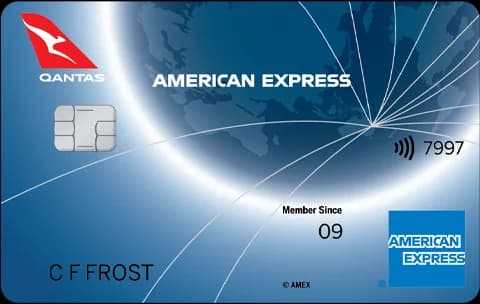
The Qantas American Express Discovery Card has an ongoing $0 annual card fee and earns Qantas Points on eligible purchases. It is one verified option for keeping the yearly card fee down. A first-year waiver, a monthly fee waived after spending, and a paid card with a travel credit work differently, so check the second year before comparing the rewards.
A verified Qantas card with an ongoing $0 fee
We checked the American Express Discovery product page on 9 September 2026. It lists these rates:
| Qantas American Express Discovery | Published amount |
|---|---|
| Annual card fee | $0 per year |
| Ordinary eligible card purchases | 0.75 Qantas Points per $1 |
| Purchases at government bodies in Australia | 0.5 Qantas Points per $1 |
| Eligible Qantas products and services | 1.75 Qantas Points per $1 |
This guide verifies that option; it is not an exhaustive list of every Australian card or a prediction that its terms will never change. Use the Qantas card comparison to compare the cards we track across different fee levels.
Check whether the shops and bills you normally pay accept the card, and whether paying that way adds a surcharge. Spending that moves to another payment method earns no points on this card. A higher advertised rate is useful only on purchases you can make within your normal budget.
Four fee arrangements that should be compared separately
| Fee arrangement | What happens in year one | What to check later |
|---|---|---|
| Ongoing $0 annual card fee | No annual card fee under the published terms | Other charges and any later change to the terms |
| First-year annual-fee waiver | The ordinary annual fee is waived for the introductory period | The renewal fee and when it is charged |
| Conditional fee waiver | A fee is avoided only if you meet the stated condition | Whether every required month or statement period qualifies |
| Annual fee plus travel credit | You pay the fee and receive a restricted benefit | Eligible booking channel, fare, use-by date and how much you will use |
For example, the Qantas Amex Ultimate page lists a $450 annual fee and a $450 annual Qantas Travel Credit for eligible Qantas flights booked through American Express Travel. That is a paid card with a benefit. The credit is useful only if the required booking suits you; it does not remove the fee from your statement.
If you would not otherwise make an eligible booking, value that benefit at zero in your comparison. If the eligible fare costs more than an acceptable alternative, deduct the difference when deciding how much the credit helps.
What ongoing earning could look like
Suppose you spend $2,000 each month on purchases earning the Discovery card's published ordinary rate. All purchases are eligible, none is in a different earning category, and you pay no surcharge or interest. This is an earning calculation, not a card application recommendation or a flight quote:
$2,000 × 12 months × 0.75 = 18,000 Qantas Points in a year.
At an assumed personal redemption value of 1 cent per point, those points represent $180 of avoided spending. At 0.5 cents they represent $90. Neither amount is cash paid by the card issuer. You still need a redemption you can use. Our points-value guide explains how to choose a value from an actual purchase or trip.
Now suppose $500 of the $2,000 monthly spending attracts a 1% card surcharge. That costs $5 each month, or $60 a year. With all other assumptions unchanged, the $180 illustrative reward value falls to $120 after the surcharge. Paying that bill another way may be preferable even though fewer points arrive.
Compare year one with the next year
The following products are entirely hypothetical. They show how a waived fee can change the answer after renewal. Both receive $24,000 of eligible annual spend; the assumed value is 1 cent per point. There are no bonuses, interest, surcharges, caps or other benefits.
| Illustrative card | Annual points | Year-one fee | Year-one points value less fee | Year-two fee | Year-two points value less fee |
|---|---|---|---|---|---|
| Ongoing no-fee card, earning 0.75 points per $1 | 18,000 | $0 | $180 | $0 | $180 |
| Introductory fee-waiver card, earning 1.25 points per $1 | 30,000 | $0 | $300 | $300 | $0 |
The second card earns 12,000 more points each year. Under the 1-cent assumption, that is $120 of extra value, which does not cover its $300 renewal fee. To cover that fee through the extra points alone, each extra point would need to save 2.5 cents: $300 divided by 12,000, multiplied by 100.
The result changes with your spending, earning categories and actual redemptions. Use the card-value calculator to compare your own assumptions, and keep a sign-up bonus separate from ordinary earning.
Other costs still matter
An annual fee is only one charge. Read the purchase interest rate, conditions for interest-free days, foreign transaction fees and any late-payment or cash-advance charges. Moneysmart's card comparison guidance recommends comparing rewards with the associated fees and rates. If you expect to carry a balance, a lower-interest option may save more than collecting points.
Avoid increasing spending just to reach a fee-waiver threshold or bonus. A $200 purchase you did not need is still a $200 expense. Refunds, excluded payments and delayed posting can also affect a welcome offer; see our bonus eligibility guide before counting one.
Decide whether you need a points card at all
Start with three figures: the purchases you can pay with the card without extra cost, the points those purchases would earn, and the fees you would actually pay. Then identify a useful way to spend those points. Review the same calculation at renewal, when an introductory offer may have ended.
You can also earn Qantas Points without flying through eligible everyday partners without adding a new credit card. Compare those options alongside the card, particularly if your ordinary spending would build only a small balance.